
Serving mothers all over the eastern area of the DFW metroplex including Rockwall, Mesquite, Garland, Forney, Royse City, Greenville, Wylie, Richardson and Rowlett. We looks forward to meeting you and your family!
SCHEDULE YOUR FREE CONSULTATION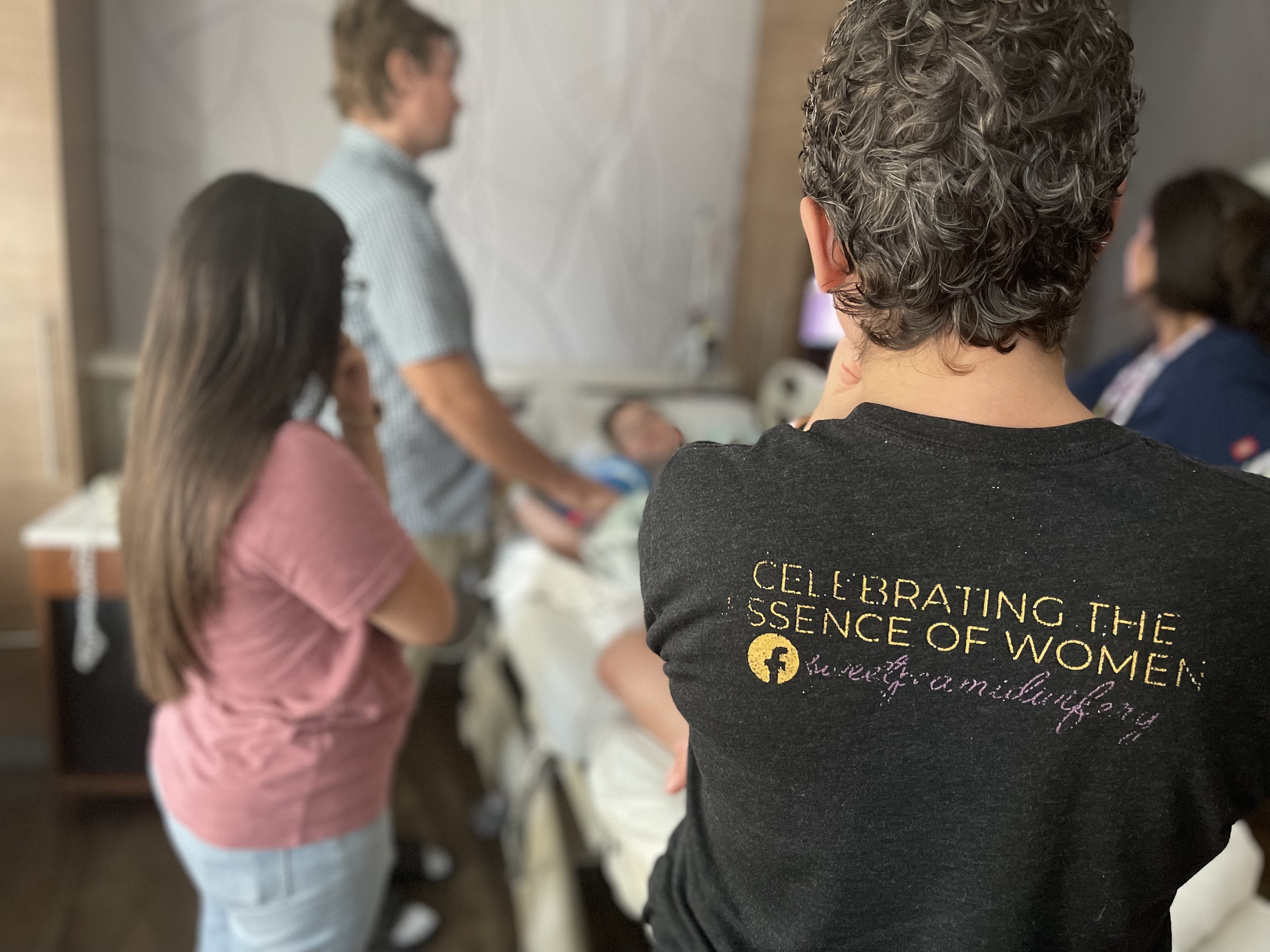
By Sweet Pea Midwifery
Choosing midwifery care means choosing a model centered on relationship, physiological birth, shared decision-making, and honoring your autonomy. But sometimes—whether due to medical indications, personal preference, or simply the unpredictability of birth—transferring from midwifery care to the obstetric model becomes the safest option.
A transfer doesn’t mean you’ve “lost” your birth vision or that your midwifery care ends. It simply means your care team expands. At Sweet Pea Midwifery, our goal is to help you feel informed, respected, and supported throughout the entire process, including during a transfer. Below is a guide to help you understand what to expect and how to navigate the modern obstetric system if a transfer becomes part of your birth story.
Transfers occur for many reasons—some urgent, some not. Common situations include:
Labor patterns that don’t progress as expected
Maternal exhaustion
Requests for pain medication not available in out-of-hospital settings
Non-reassuring fetal heart rate patterns
Medical complications before or during labor
Midwives are trained clinicians who recognize when additional tools or resources may optimize safety. A transfer is an act of care, not an act of failure.
Entering a hospital from a midwifery setting can feel abrupt—new environment, new faces, and sometimes a very different style of care. Understanding what to expect can help ease the transition.
Obstetric care often prioritizes efficiency, monitoring, and risk management. You may notice:
More frequent assessments
Additional equipment or continuous monitoring
A larger care team (nurses, obstetricians, residents, anesthesiologists)
This doesn’t mean your preferences or autonomy disappear—it simply means your care now blends your values with a system designed around medical resources and protocols.
In most transfer situations, your midwife remains involved:
Providing continuity of emotional support
Sharing your history with the hospital team
Helping you ask questions and understand recommendations
Advocating for your birth preferences when possible
While the obstetric team becomes responsible for medical decision-making, your midwife stays by your side whenever allowed by hospital policy.
Even in a medical setting, you have the right to participate in your care plan.
Consider asking:
“What are my options?”
“What are the benefits and risks of each?”
“Is this an emergency, or can I have a moment to think?”
Shared decision-making may look different in the hospital, but it is still your care and your body.
Midwifery and obstetrics are complementary—each shines in different situations.
Autonomy
Physiological birth
Continuity
Low-intervention approaches
Holistic support
Specialized tools or medications are needed
Surgical or medical intervention is indicated
Immediate response to medical complications is required
When combined during a transfer, families receive the benefits of both—personalized care grounded in safety.
Here are a few tips for navigating the hospital setting with confidence:
A birth plan isn’t a script—it’s a communication tool. Bringing it to the hospital helps your new care team quickly understand your values.
Midwives, doulas, and partners can serve as emotional anchors and help clarify what’s happening.
Information is empowering. Asking questions helps you stay engaged and reduces uncertainty.
Transfers can stir up emotion—disappointment, relief, anxiety, or gratitude. All of it is valid. Your birth remains meaningful and uniquely yours.
Whether your transfer felt smooth or challenging, postpartum is an important time to reflect and integrate your story.
Sweet Pea Midwifery offers:
Postpartum visits after transfer
Birth story debriefing
Emotional support and referrals when needed
You deserve the space to honor what you navigated with strength and resilience.
A transfer does not change who you are as a parent or the intentions you brought to your birth. It simply means your care adapted to the circumstances—and adaptability is a powerful expression of love and wisdom.
At Sweet Pea Midwifery, we walk with you through every chapter of your journey, including the ones that lead you into the modern obstetric system. With the right support, a transfer can still be safe, empowering, and deeply connected to your values.
If you have questions about transfers, hospital collaboration, or how we support you throughout the process, we’re always here to talk.


 admin@sweetpeamidwifery.com
 469-515-5355